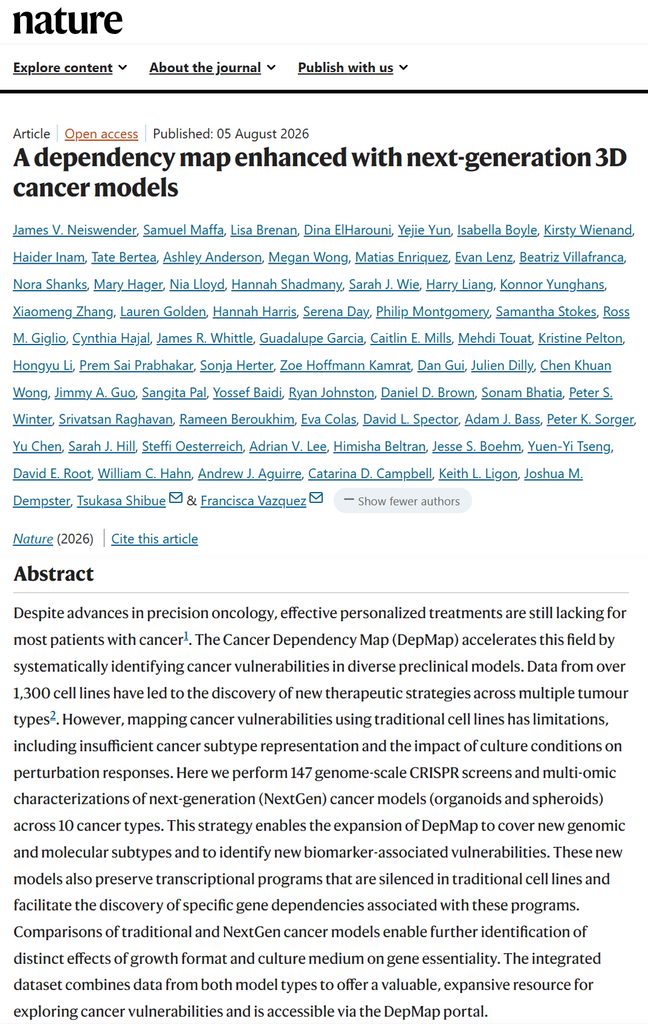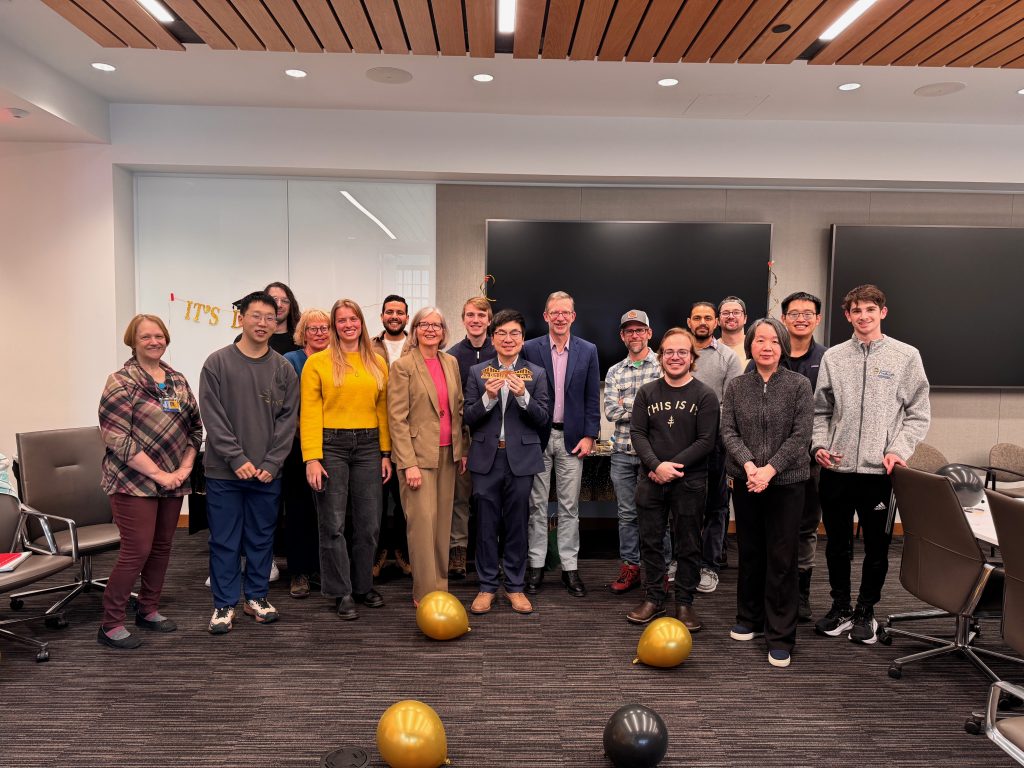
Congrats to Drs. Adrian V. Lee, Steffi Oesterreich, and Daniel D. Brown for their contributions to the latest Nature publication: A dependency map enhanced with next-generation 3D cancer models!
https://www.nature.com/articles/s41586-026-10843-7
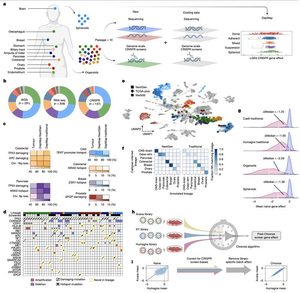
This work was a collaboration with the Broad Institute of MIT and Harvard. Breast cancer patient-derived organoid (PDO) models were developed by Daniel Brown in the Institute for Precision Medicine in collaboration with the Lee-Oesterreich lab, and some of these PDO models were provided to the Broad Institute. The Broad team ran genome-scale CRISPR screens across 147 organoid and spheroid models spanning 10 cancer types, expanding the Cancer Dependency Map (DepMap) into tumor subtypes traditional cell lines simply don’t capture. These models preserve transcriptional programs that get silenced in 2D culture (like the PDAC-classical/MUC program in GI organoids), and oncogene dependency itself can be model-dependent. Model choice shapes the biology we’re able to see.
This manuscript was one of three companion papers published together in Nature, all validating patient-derived 3D cancer models as the next generation of preclinical tools.
Our contribution to this work was supported in part by NIH R01CA252378 through the National Cancer Institute (NCI) Oncology Models Forum, grateful for that support in helping make this collaboration possible.
This seminal paper is published alongside two outstanding companion papers:
Herranz-Ors et al. (Wellcome Sanger Institute), “A tumour-derived organoid biobank maps cancer gene dependencies” — 256 clinically annotated organoids across five GI/gynecologic cancers, with genome-wide CRISPR dependency screens on 162 of them.
ElHarouni et al., “A compendium of next-generation patient-derived models for diverse cancers” — the Human Cancer Models Initiative’s landmark 665-model resource across 25 cancer types.
Together, these three papers make a compelling, converging case that organoids and related New Approach Methodologies (NAMs) can faithfully recapitulate tumor biology at a scale sufficient for systematic target discovery, not just as a nice complement to cell lines, but as tools that reveal biology cell lines miss entirely. That’s the bet we’ve made with the Organoid Research Core here at Pitt, and it’s exciting to see it borne out across multiple independent efforts at once.
– A dependency map enhanced with next-generation 3D cancer models | Nature
– A tumour-derived organoid biobank maps cancer gene dependencies | Nature
– A compendium of next-generation patient-derived models for diverse cancers | Nature