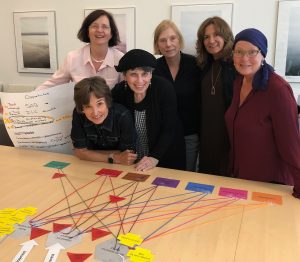
More LBCA meetings happened in which Dr. Steffi Oesterreich was happy to brainstorm with ILC patient advocates on best ways to get ILC to the forefront in research, clinical trials, meetings, education and more. Photo is taken at brainstorming session at Cleveland Clinic, organized by ILC Advocate Susan McDonald. Some of the ideas laid the foundation for the subsequent publication entitled Important “How Researchers, Clinicians and Patient Advocates Can Accelerate Lobular Breast Cancer Research” by Leigh Pate et al.

A breakout session at NWMBCC (hosted by Susan G. Komen Puget Sound) in which Dr. Steffi Oesterreich, Dr. Hannah Linden, and Leigh Pate discuss unique aspects of ILC (and a similar session). LBCA members discuss next steps for the organization, and Leigh Pate received the Beth Caldwell Advocacy and Leadership Award.
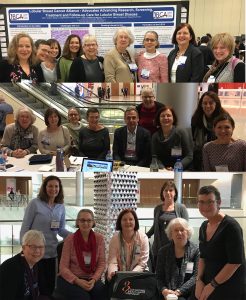
We had our first LBCA meeting, and LBCA poster at SABCS in 2017. Many patients with ILC became highly motivated and committed ILC advocates and spent countless hours working with Leigh Pate and Lori Petitti and others to get ILC advocacy off the ground.
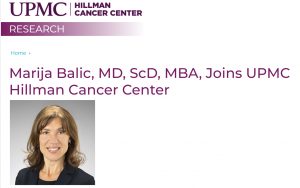
Together with Dr. Julia Foldi, Dr. Marija Balic is joining Dr. Adrian Lee’s longstanding efforts on the analysis of cfDNA in mILC, in part through the Apollo program

Dr. Rohit Bhargava and his team identified a distinct breast cancer type called “lobular-like invasive mammary carcinomas” (LLIMCas) that resembles lobular cancers histologically but lacks their characteristic CDH1 gene mutations, instead showing CDH1 promoter methylation. LLIMCas are often underestimated on imaging with frequent positive margins, and thus Dr. Bhargava recommends recognizing them as a separate entity and using preoperative MRI to guide surgical management.

The Pittsburgh ILC Program of Excellence was officially launched on October 15th, 2025, Global Lobular Breast Cancer Awareness Day. Pittsburgh’s ILC researchers, physicians, and patient advocates have formalized their long-standing collaboration into an official program dedicated to improving patient outcomes. This website documents our progress and keeps the research and patient community informed. The launch was planned and executed by a team consisting of Dr. Steffi Oesterreich, Dr. Adrian Lee, Dr. Jagmohan Hooda, Dr. Daniel Brown, Dr. Insa Thale, Hunter Waltermire, and Christopher Merkel.
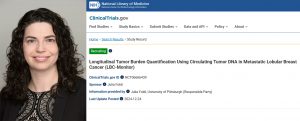
Dr. Steffi Oesterreich and Dr. Adrian Lee are proud to mentor Dr. Julia Foldi, who arrived at UPMC in 2023 after finishing her breast medical oncology training at Yale. Dr. Foldi starts to focus her work on ILC, and in 2025 she opens a Liquid Biopsy trial for patients with metastatic ILC.
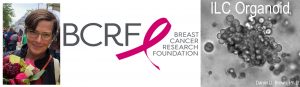
Leigh Pate passes, which is not only an unsurmountable loss for the ILC patient advocacy community, but for ILC research. Her contributions to lobular breast cancer have affected the lives of thousands of patients and their families, and this number will only continue to grow. She left a donation to BCRF which started a project aimed at generation of ILC patient-derived organoids (PDOs). This is a collaboration between UPMC Hillman Cancer Center, Memorial Sloan Kettering Cancer Center and the Institute for Precision Medicine, which Dr. Adrian Lee directs. Dr. Lee has made the generation of patient-derived breast cancer organoids, spearheaded by Dr. Daniel Brown, a priority of IPM. Dr. Jagmohan Hooda in the Lee/Oesterreich lab leads the characterization of ILC PDOs and the collaboration effort with MSKCC.

Dr. Steffi Oesterreich and Dr. Adrian Lee receive funding from the NCI Oncology Models Forum to increase quality and quantity of ILC models: “Credentialing Models of Invasive Lobular Breast Cancer for Translational Research”– lack thereof was a critical hurdle for progress in ILC research.
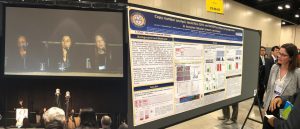
San Antonio Breast Cancer Symposium 2018 has its first ILC-focused session, in which Dr. Oesterreich spoke about progress made understanding unique ILC biology.